

Law Students Sue UC Berkeley Over Unprecedented Palestine Censorship
/Palestine Legal and co-counsel Leonard Carder, LLP and Salahi PC filed a federal lawsuit on November 18th, 2026, on behalf of Law Students for Justice in Palestine (LSJP) at Berkeley Law challenging the school's denial of the group's status as a student organization for adopting a bylaw stating that it will not host speakers who oppose Palestinian rights.
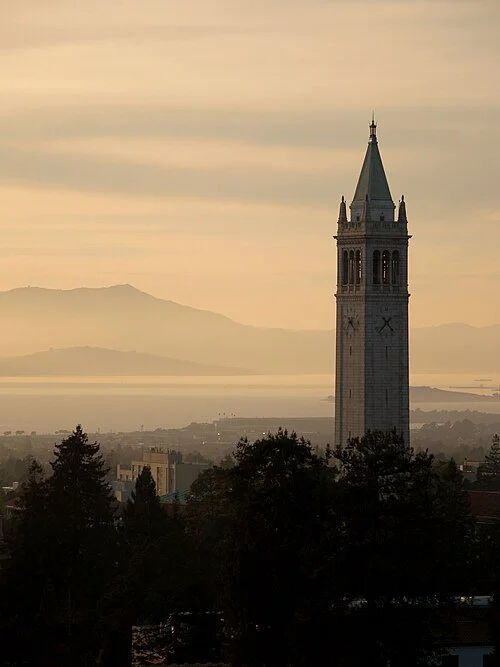
Source: WIKIMEDIA COMMONS. This file is licensed under the Creative Commons Attribution-Share Alike 2.5 Generic license.
In an unprecedented move, Law Students for Justice in Palestine (LSJP) at Berkeley Law was denied recognition as a registered student group for the first time in its 24-year history following UC Berkeley's agreement to settle a lawsuit brought by the Brandeis Center, a right-wing Israel lobby group.
According to UC Berkeley Law Dean Erwin Chemerinsky, LSJP was denied recognition by Berkeley Law because of a bylaw in its constitution stating that it will not host speakers whose views conflict with its mission. The current bylaw states, "As an expression of LSJP's political commitment to Palestinian liberation and anti-Zionism, and consistent with its commitment to BDS [boycott, divestment, and sanctions], LSJP will not invite speakers that have expressed and continued to hold views or host/sponsor/promote events in support of Zionism, the apartheid state of Israel, and the occupation of Palestine." LSJP has maintained a version of this bylaw since 2022; twenty-two other student groups also adopted similar bylaws in 2022.
In 2023, following a wave of campus protests against Israel's genocide in Gaza, the Brandeis Center sued UC Berkeley demanding the university prohibit Law Students for Justice in Palestine's bylaw. Earlier this year, the university acquiesced to the pressure and voluntarily settled with the right-wing lobby group, agreeing to prohibit student organizations from adopting speaker restrictions at the law school and severely restricting how people talk about Palestine on campus.
Berkeley's denial of Law Students for Justice in Palestine's status has already significantly impeded the students' ability to advocate for Palestinian rights on campus. As a result of the denial, LSJP cannot host events, co-sponsor events, post flyers (the school has torn down flyers with its name on it), book rooms in the law school for meetings, table, or be reimbursed for money spent on food at events prior to the group’s denial of recognition.
The student group seeks relief from the court including an order that Berkeley recognize Law Students for Justice in Palestine as an official student organization at the Law School, protect student groups' First Amendment right to political speech including political boycotts, and rescind harmful policies adopted in the Brandeis settlement.
The case is Berkeley Law Students for Justice in Palestine v. The Regents of the University of California, UC Berkeley School of Law, et al.
Timeline
June–August 2022: Law Students for Justice in Palestine (LSJP) at Berkeley Law invites other student organizations to join them in adopting a bylaw committing to engage with the Palestinian-led boycott, divestment, and sanctions (BDS) movement, including a pledge not to invite speakers who express support for Zionism, Israel as an apartheid state, or the occupation of Palestine. LSJP and eight other student organizations adopt the bylaw.
September 28–September 30, 2022: The bylaws attract national attention following a campaign by pro-Israel organizations demanding that Berkeley Law intervene against the student groups. On September 28, Kenneth Marcus, founder and chairman of the Louis D. Brandeis Center, publishes an article falsely characterizing the student organizations as creating "Jewish-free zones" at Berkeley Law. The article quickly goes viral, attracting condemnation from prominent public figures. On September 30, Republican Senator Ted Cruz calls the students' actions "disgraceful."
September 30, 2022: The American Association of Jewish Lawyers and Jurists sends a letter directly to Dean Erwin Chemerinsky demanding that Berkeley prohibit student organizations maintaining the bylaws from using university funding, facilities, and official communications channels. The letter invokes Christian Legal Society v. Martinez and threatens to encourage its members to reconsider hiring Berkeley Law graduates. Alyza Lewin, then president of the Brandeis Center, is listed on the association's Board of Governors.
October 3, 2022: The Brandeis Center joins AIPAC, StandWithUs, the American Jewish Committee, and dozens of other organizations in a public statement calling on Berkeley Law to force the student groups to rescind their bylaws or face sanctions. The statement argues that Zionism is fundamental to Jewish identity and characterizes the student groups' political boycott as antisemitic discrimination. The coalition demands that Berkeley Law take "all lawful and necessary steps" to prevent the groups from maintaining the provisions. In an internal memo, the American Jewish Committee acknowledges learning that Jewish students' experience on campus had not really changed as a result of the situation.
October 21, 2022: Despite publicly criticizing the bylaws, Dean Chemerinsky expressly affirms that the student groups have a First Amendment right to adopt them. Responding to demands that Berkeley punish the organizations, he states: "This we will not do and cannot do." He explains that student organizations are entitled to select speakers based on their political views and that requiring them to invite speakers whose views they oppose would constitute compelled speech.
Fall 2022: The Brandeis Center joins a coalition of 35 organizations sending letters to major law firms that sponsor Berkeley Law student groups, demanding that the firms withdraw financial support unless the organizations rescind their bylaws. The campaign extends pressure beyond the university administration to the students' potential professional and financial supporters.
November 28, 2023: The Brandeis Center and its newly established membership group Jewish Americans for Fairness in Education (JAFE) file a federal lawsuit against UC Berkeley, Berkeley Law, and university officials, alleging discrimination and a hostile environment for Jewish students. The lawsuit specifically challenges LSJP's speaker-selection policy and similar bylaws adopted by other organizations, arguing that the exclusion of Zionist speakers constitutes discrimination against Jewish people rather than protected political expression.
February 29, 2024: At a hearing on UC Berkeley's motion to dismiss the Brandeis Center's lawsuit, Judge James Donato expresses serious skepticism about the plaintiffs' attempt to equate opposition to Zionism with discrimination against Jews. Noting that some Jews are Zionists while others are anti-Zionists, Donato challenges the Brandeis Center's argument that Zionism and Judaism are inseparable, stating: “The fact that Judaism and Zionism are so tied together at the hip they can't be separated I don't think is true at all.” He further observes that if Zionism is a political viewpoint, the university cannot suppress it: “They can't snuff out a point of view no matter how offensive they find it.” Donato also questions what legally cognizable harm anyone suffered from not being invited to speak to a student organization, comparing the bylaws to a gun-rights organization declining to invite an opponent of the Second Amendment.
October 25, 2024: Judge James Donato grants six UC Berkeley students permission to intervene as defendants in the Brandeis Center litigation, allowing them to defend their interests in the university's treatment of pro-Palestinian speech and advocacy. The students include members of organizations that authored or adopted the speaker-selection bylaws, as well as students involved in campus protests.
March 31, 2025: Judge Donato partially grants the university's motion to dismiss. Although he permits several discrimination claims to proceed, he warns that the Brandeis Center's assertion that Zionism is a central tenet of Judaism raises serious Establishment Clause concerns. The court emphasizes that the Constitution prohibits federal judges from determining the tenets of a religion and declares: "the Court will not determine if it is a central tenet of Judaism." The court also dismisses the Brandeis Center's claim alleging interference with contractual relationships with prejudice, finding that the complaint failed to identify any academic who had sought to speak to the student organizations and been turned away because of the bylaws.
March 19, 2026: UC Berkeley and the Brandeis Center sign and publicly announce a settlement ending the litigation, without any judicial finding or admission of wrongdoing by Berkeley. The settlement requires rescission of the student-group bylaws challenged in the lawsuit and prohibits Berkeley Law student organizations from including restrictions on speakers in their constitutions or bylaws. The university also agrees to consider the IHRA definition of antisemitism when evaluating discrimination complaints and to pay the Brandeis Center $1 million in attorneys' fees and costs.
April 30, 2026: At a hearing concerning dismissal of the Brandeis lawsuit, the intervening students object to the settlement, arguing that it threatens their First Amendment rights and that Berkeley has failed to adequately defend those interests. Judge Donato declines to prevent dismissal, but expressly confirms that the settlement does not extinguish the students' legal claims or prevent them from bringing their own constitutional challenge. When counsel for the students argues that the settlement is discriminatory and politically biased, Donato responds: "You can sue on that." He further explains that the students remain free to file a lawsuit challenging the settlement's restrictions on student-group bylaws: "you'll be free to go to file a lawsuit tomorrow after this case is dismissed and bring any challenge you want." The judge also emphasizes that the settlement is a private agreement that he has no authority to approve, and grants dismissal without adjudicating the constitutionality of its provisions.
August 24, 2026: When LSJP seeks recognition for the 2026–27 academic year, Berkeley Law refuses to approve its bylaws because they contain the longstanding anti-Zionist speaker-selection provision. In correspondence with LSJP, Dean Chemerinsky acknowledges that "the First Amendment protects the right of student organizations to choose speakers based on their views" but states that the settlement prevents the university from approving the organization's bylaws. LSJP is consequently excluded from the law school's student-organization benefits, including access to funding, room reservations, and event advertising.
September 25, 2026: Dean Chemerinsky confirms that LSJP remains without Berkeley Law student-organization status because of its bylaws, ending more than two decades of uninterrupted recognition since the organization's founding in 2002.
November 2026: LSJP brings a federal First Amendment lawsuit challenging Berkeley Law's refusal to recognize the organization based on its bylaw stating its political speaker-selection policy. The lawsuit alleges that the university is penalizing Palestinian students for their protected expression and conditioning access to public-university benefits on abandoning a statement of their political beliefs.
LSJP v. UCB Preliminary Injunction Motion, (Nov. 18, 2026)